

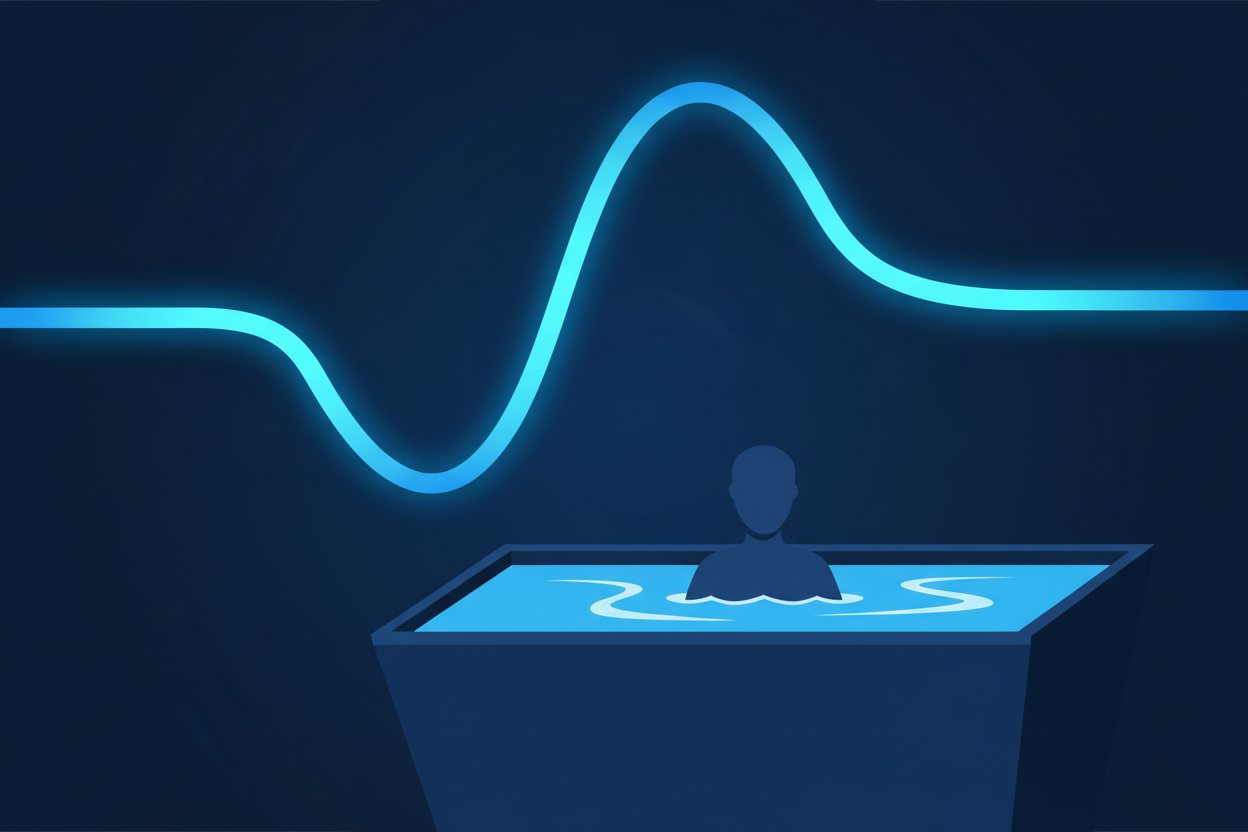
Cold Plunge and HRV: What the Data Actually Shows
Heart rate variability has become one of the most tracked metrics in performance health. Athletes, executives, and biohackers monitor it daily as a proxy for recovery quality, autonomic nervous system function, and readiness to train. And cold water immersion is one of the most frequently cited interventions for improving it.
But what does the data actually show? This article breaks down the mechanism, the evidence, and the protocol variables that determine whether cold plunge moves your HRV in a meaningful direction.
What HRV Actually Measures
Heart rate variability is not a measure of heart rate. It is a measure of the variation in time between consecutive heartbeats — specifically, the degree to which that interval fluctuates. Higher variability is generally associated with a well-regulated autonomic nervous system, stronger parasympathetic tone, and greater physiological resilience. Lower variability is associated with stress load, poor recovery, and autonomic dysregulation.
HRV is governed by the balance between the sympathetic nervous system (fight-or-flight) and the parasympathetic nervous system (rest-and-digest). Interventions that strengthen parasympathetic tone — quality sleep, controlled breathing, aerobic fitness, and cold exposure — tend to improve HRV over time. Interventions that chronically elevate sympathetic tone — overtraining, poor sleep, chronic stress — suppress it.
How Cold Exposure Affects the Autonomic Nervous System
Cold water immersion produces an acute sympathetic response: heart rate spikes, blood pressure rises, and the body initiates vasoconstriction. This is the initial cold shock response — a survival mechanism driven by the sympathetic nervous system.
What happens next is the mechanism of interest. As the practitioner remains in the cold and regulates their breathing, the parasympathetic nervous system begins to reassert itself. Heart rate slows. The acute stress response is modulated. This transition — from sympathetic dominance to parasympathetic recovery — is the training stimulus that repeated cold exposure is thought to strengthen over time.
The hypothesis, supported by a growing body of evidence, is that repeated practice of this sympathetic-to-parasympathetic transition builds autonomic flexibility — the ability of the nervous system to shift efficiently between activation and recovery states. HRV is one of the primary markers of that flexibility.
What the Research Shows
The evidence on cold water immersion and HRV is directionally consistent, though the literature is still maturing in terms of standardized protocols and long-term longitudinal data.
Key findings:
- Acute post-immersion HRV elevation: Multiple studies have documented a measurable increase in HRV in the hours immediately following cold water immersion, consistent with enhanced parasympathetic rebound after the acute sympathetic response. This effect is most pronounced in the 30–90 minutes post-immersion.
- Cumulative adaptation with repeated exposure: Research on athletes using regular cold water immersion protocols over 8–12 weeks has shown improvements in resting HRV, suggesting that the autonomic adaptation is cumulative rather than purely acute.
- Breathing as a moderating variable: Studies examining controlled breathing during cold immersion — slow diaphragmatic breathing, extended exhales — show amplified parasympathetic response compared to uncontrolled breathing. The breath is not incidental; it is a primary driver of the HRV benefit.
- Timing relative to training: Cold immersion immediately post-exercise produces a different HRV response than cold immersion as a standalone practice. Post-exercise CWI tends to accelerate HRV recovery toward baseline, which is relevant for athletes managing high training loads across consecutive days.
Protocol Variables That Affect HRV Outcomes
Not all cold plunge sessions produce equivalent HRV effects. The variables that matter:
Temperature: The 50–59°F range appears to produce the most consistent HRV benefit for most practitioners. Colder temperatures (39–50°F) produce a stronger acute sympathetic response, which may amplify the subsequent parasympathetic rebound — but also increase total stress load, which can suppress HRV if recovery is insufficient.
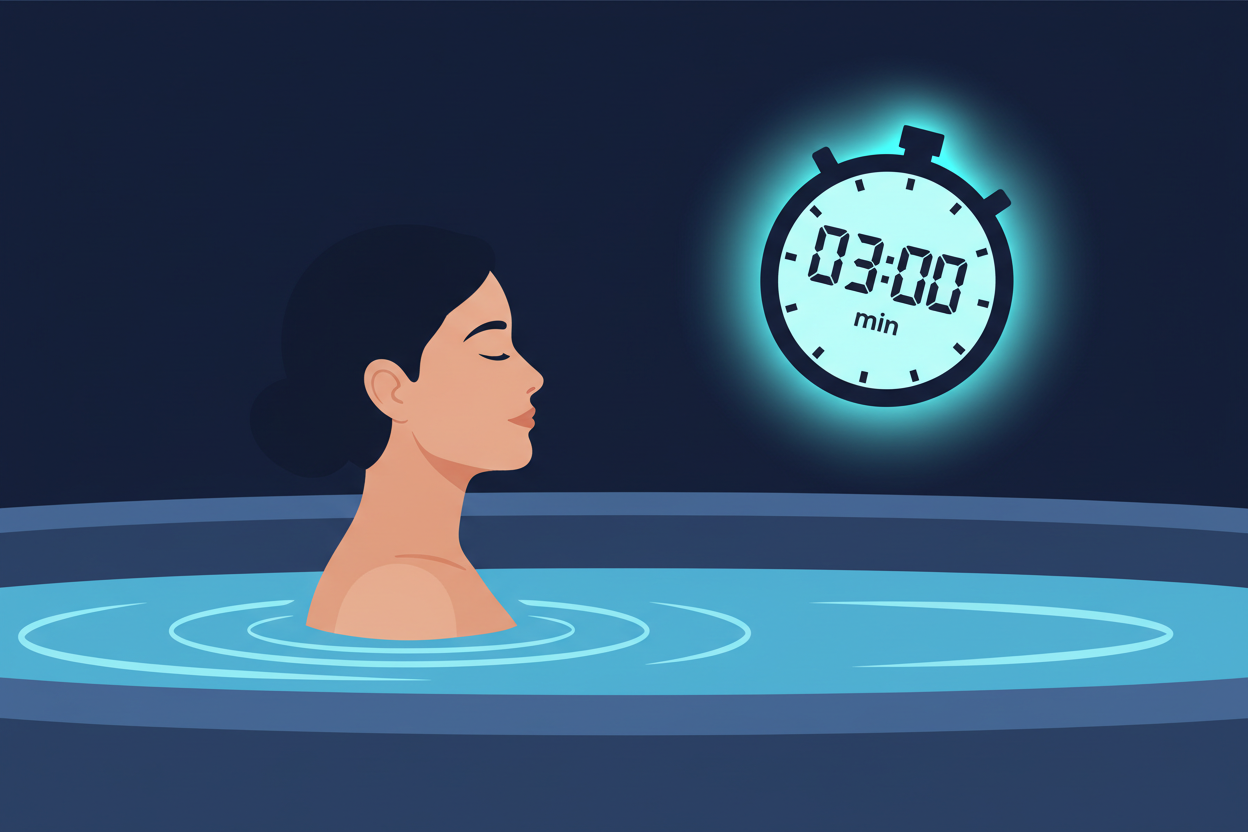
Duration: 10–15 minutes at 50–59°F is the range most commonly associated with post-immersion HRV elevation in the literature. Shorter sessions produce attenuated effects; longer sessions at cold temperatures increase stress load without proportional HRV benefit.
Frequency: The cumulative HRV adaptation appears to require consistent exposure — 3–5 sessions per week over 8–12 weeks minimum. Single sessions produce acute effects; chronic adaptation requires chronic stimulus.
Breathing protocol: Slow, controlled breathing during immersion — 4–6 second inhale, 6–8 second exhale — directly activates the vagus nerve and amplifies parasympathetic tone during and after the session. This is not optional for practitioners targeting HRV improvement specifically.
What HRV Data Can Tell You About Your Protocol
If you are tracking HRV daily — via Whoop, Oura, Garmin, or similar — cold plunge gives you a direct feedback loop. A well-executed session at the right temperature and duration should produce a measurable HRV elevation in the 30–90 minutes post-immersion. Over weeks of consistent practice, resting HRV may trend upward.
If your HRV is trending down despite regular cold exposure, the most common causes are: sessions that are too cold or too long (excessive stress load), insufficient recovery between sessions, or compounding stressors (poor sleep, overtraining) that the cold exposure cannot offset.
HRV is a systems metric. Cold plunge is one input. It works best as part of a recovery stack that includes sleep quality, training load management, and nutrition — not as a standalone intervention.
Temperature Precision and HRV Consistency
If HRV improvement is a primary goal, temperature consistency across sessions is not a minor detail — it is the protocol. A session at 52°F and a session at 62°F produce meaningfully different autonomic responses. Tracking HRV against inconsistent temperature inputs produces uninterpretable data.
The Orivon Black Frost, White Frost, and Metallic Frost maintain precise, consistent temperature across every session — which means your HRV data is actually tracking your protocol, not your equipment variance. Complimentary freight delivery included with every Orivon order (valued at $250–$400). Price match guarantee applies.
The Bottom Line
Cold water immersion produces measurable, reproducible effects on HRV — both acutely post-session and cumulatively over weeks of consistent practice. The mechanism is autonomic: repeated sympathetic activation followed by parasympathetic recovery builds the nervous system's capacity to shift efficiently between states. Temperature, duration, frequency, and breathing protocol are the variables. Consistency is the requirement.
References
- Buchheit, M., et al. (2009). Effect of cold water immersion on postexercise parasympathetic reactivation. American Journal of Physiology — Heart and Circulatory Physiology, 296(2), H421–H427.
- Al Haddad, H., et al. (2010). Effect of cold or thermoneutral water immersion on post-exercise heart rate recovery and heart rate variability indices. Autonomic Neuroscience, 156(1–2), 111–116.
- Mooventhan, A. & Nivethitha, L. (2014). Scientific evidence-based effects of hydrotherapy on various systems of the body. North American Journal of Medical Sciences, 6(5), 199–209.
- Versey, N.G., et al. (2013). Water immersion recovery for athletes: effect on exercise performance and practical recommendations. Sports Medicine, 43(11), 1101–1130.
- Porges, S.W. (2007). The polyvagal perspective. Biological Psychology, 74(2), 116–143.
- Bleakley, C., et al. (2012). Cold-water immersion (cryotherapy) for preventing and treating muscle soreness after exercise. Cochrane Database of Systematic Reviews, Issue 2.
Disclaimer: This article is for informational purposes only and does not constitute medical advice. Consult a qualified healthcare provider before beginning any cold water immersion practice, particularly if you have a cardiovascular condition or other health concerns.


Leave a comment
This site is protected by hCaptcha and the hCaptcha Privacy Policy and Terms of Service apply.