

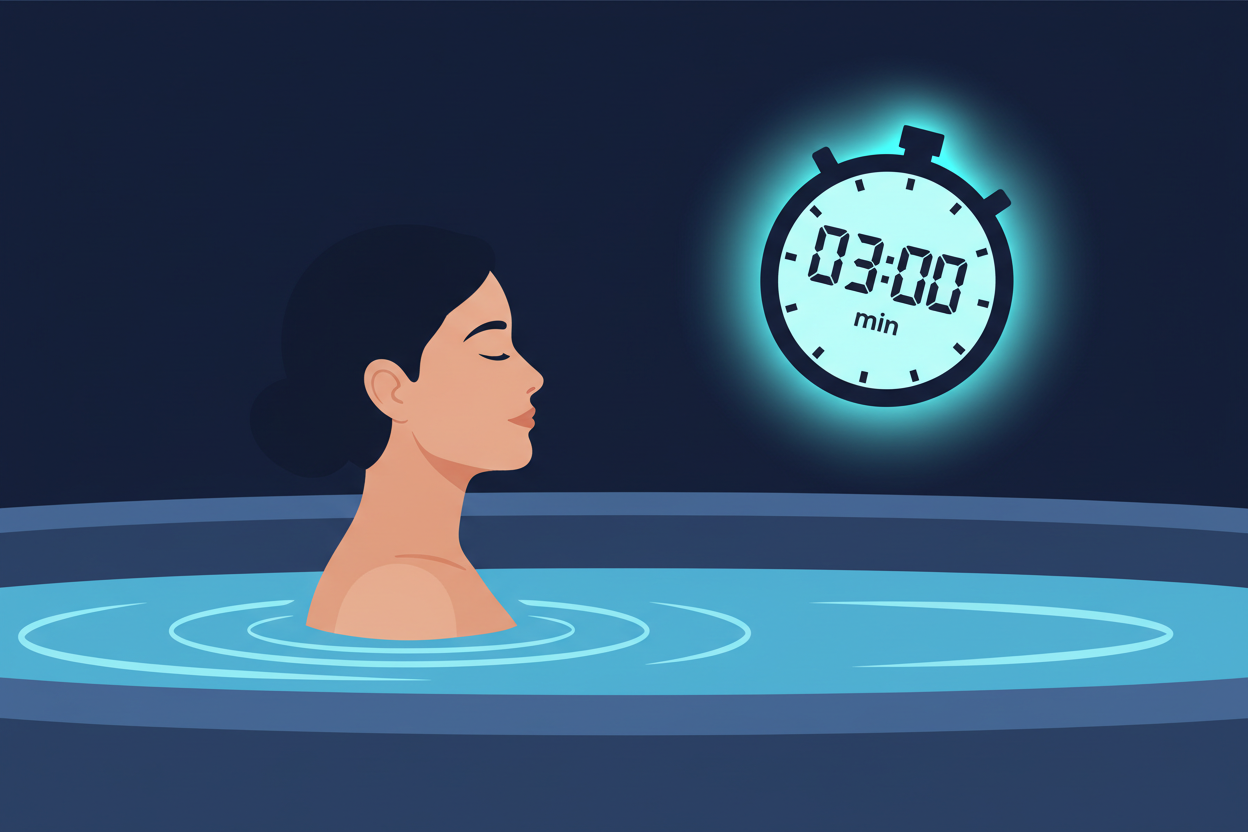
How Long Should You Cold Plunge? A Protocol Guide by Goal
Temperature gets most of the attention in cold plunge discussions. Duration is the variable that most practitioners get wrong.
Too short and you don't reach the physiological threshold for the adaptation you're targeting. Too long and you move past the point of diminishing returns into unnecessary stress load — or, at low temperatures, genuine risk. The research on cold water immersion is specific about duration, and the optimal window varies significantly depending on what you're trying to accomplish.
This is the protocol guide.
Why Duration Is a Distinct Variable
Cold exposure is a dose-response intervention. Temperature sets the intensity; duration sets the dose. Both matter, and they interact. A 3-minute session at 40°F produces a different physiological outcome than a 3-minute session at 60°F — and a different outcome than a 10-minute session at 40°F.
The research literature treats these as separate variables, and your protocol should too.
Duration by Goal
Goal: Neurochemical Output (Dopamine, Norepinephrine)
Target duration: 2–6 minutes at 39–50°F
The neurochemical response to cold exposure is front-loaded. The acute norepinephrine spike — documented at 200–300% above baseline — occurs within the first few minutes of immersion at cold temperatures. Dopamine elevation, which research has shown to persist for hours post-session, is similarly triggered early in the exposure window.
Extending the session beyond 6 minutes at this temperature range does not meaningfully amplify the neurochemical response. It does increase the total stress load on the body. For practitioners using cold plunge primarily as a cognitive performance and mood regulation tool, 2–6 minutes is the efficient dose.
Goal: Athletic Recovery and DOMS Reduction
Target duration: 10–15 minutes at 50–59°F
The majority of peer-reviewed studies on cold water immersion for post-exercise recovery use 10–15 minute protocols. This duration is sufficient for meaningful vasoconstriction, reduction of localized inflammatory markers, and the metabolic waste clearance effect that underlies the perceived recovery benefit.
Below 10 minutes at this temperature range, the recovery effect is present but attenuated. Above 15 minutes, the marginal benefit plateaus and the risk of excessive core temperature reduction increases — particularly relevant for athletes training in cold ambient conditions.
Note for strength athletes: there is ongoing research debate about whether CWI immediately post-resistance training blunts hypertrophic signaling. The current evidence suggests the effect is modest and context-dependent. If hypertrophy is the primary goal, consider delaying the cold plunge by 4–6 hours post-training or reserving it for non-resistance training days.
Goal: Hormetic Adaptation and Longevity Markers
Target duration: 10–20 minutes at 59–68°F
Hormetic adaptation — the process by which repeated controlled stress produces a stronger physiological baseline — benefits from longer exposure at moderate temperatures. Cold shock protein synthesis, which is associated with cellular resilience and has been studied in the context of longevity research, is a sustained-exposure response rather than an acute one.
At warmer temperatures in this range, the body can tolerate and benefit from longer sessions. This is the appropriate protocol for practitioners focused on long-term adaptation rather than acute performance outcomes, and for those building tolerance before progressing to colder, shorter sessions.
Goal: Cardiovascular Adaptation
Target duration: 10–15 minutes at 50–59°F, 3–5x per week
Repeated cold water immersion has been associated with improved cardiovascular markers including resting heart rate reduction, improved heart rate variability (HRV), and enhanced vascular tone through repeated vasoconstriction/vasodilation cycles. These are cumulative adaptations — they require consistent, repeated exposure over weeks and months, not single sessions.
The protocol that produces these adaptations in the research literature is 10–15 minutes at 50–59°F, multiple times per week, sustained over 8–12 weeks minimum. Frequency and consistency matter more than any single session duration.
Goal: Stress Inoculation and Resilience Training
Target duration: 3–5 minutes at 39–50°F
This application is less about the physiological outcome of any single session and more about the neurological training effect of repeatedly choosing discomfort under controlled conditions. The sympathetic nervous system activation at cold temperatures — the spike in heart rate, the urge to exit — is the stimulus. Learning to regulate that response through breath control and deliberate stillness is the adaptation.
3–5 minutes at this temperature range is sufficient to produce a meaningful sympathetic response without requiring the extended exposure of a recovery protocol. This is the range used by practitioners focused on mental performance, stress regulation, and what researchers sometimes call “top-down control” — the ability of the prefrontal cortex to override the limbic stress response.
Duration Guidelines — Quick Reference
| Goal | Temperature | Duration | Frequency |
|---|---|---|---|
| Neurochemical output | 39–50°F | 2–6 min | Daily or as needed |
| Athletic recovery | 50–59°F | 10–15 min | Post-training |
| Hormetic adaptation | 59–68°F | 10–20 min | Daily |
| Cardiovascular adaptation | 50–59°F | 10–15 min | 3–5x/week |
| Stress inoculation | 39–50°F | 3–5 min | Daily |
The Consistency Principle
Across all goals, the research is consistent on one point: frequency and consistency outperform intensity. A 5-minute session at 50°F, five days a week, produces superior long-term adaptation compared to a single 20-minute session at 40°F once a week. The body adapts to repeated stimuli, not occasional extremes.
This is also the practical argument for owning your own cold plunge rather than relying on gym access or periodic ice bath setups. A protocol requires repeatability. Repeatability requires reliable equipment.
The Orivon Black Frost, White Frost, and Metallic Frost are built for daily use — precise temperature control, commercial-grade filtration, and the structural integrity to hold a consistent protocol for years, not months. Complimentary freight delivery included with every order (valued at $250–$400). Price match guarantee applies.
The Bottom Line
Duration is a prescription, not a preference. Know your goal, set your time, and run the protocol consistently. The adaptation follows the stimulus — but only if the stimulus is repeatable.
References
- Srámek, P., et al. (2000). Human physiological responses to immersion into water of different temperatures. European Journal of Applied Physiology, 81(5), 436–442.
- Søberg, S., et al. (2022). Deliberate cold exposure causes a prolonged increase in human brown adipose tissue metabolic activity. Cell Reports Medicine, 3(10).
- Bleakley, C., et al. (2012). Cold-water immersion (cryotherapy) for preventing and treating muscle soreness after exercise. Cochrane Database of Systematic Reviews, Issue 2.
- Versey, N.G., et al. (2013). Water immersion recovery for athletes: effect on exercise performance and practical recommendations. Sports Medicine, 43(11), 1101–1130.
- Roberts, L.A., et al. (2015). Post-exercise cold water immersion attenuates acute anabolic signalling and long-term adaptations in muscle to strength training. Journal of Physiology, 593(18), 4285–4301.
- Fujita, J. (1999). Cold shock response in mammalian cells. Journal of Molecular Microbiology and Biotechnology, 1(2), 243–255.
- Mooventhan, A. & Nivethitha, L. (2014). Scientific evidence-based effects of hydrotherapy on various systems of the body. North American Journal of Medical Sciences, 6(5), 199–209.
Disclaimer: This article is for informational purposes only and does not constitute medical advice. Consult a qualified healthcare provider before beginning any cold water immersion practice, particularly if you have a cardiovascular condition or other health concerns.


Leave a comment
This site is protected by hCaptcha and the hCaptcha Privacy Policy and Terms of Service apply.