

Norepinephrine, Dopamine, and the Cold Plunge: The Neurochemistry Explained
Cold water immersion is one of the most reliable non-pharmacological tools for producing acute neurochemical change. The mechanisms are well-documented, the effects are measurable, and the research is specific enough to inform a precise protocol.
This article covers the two primary neurochemicals involved — norepinephrine and dopamine — what cold exposure does to each, why it matters for performance and mental health, and how to structure your sessions to maximize the neurochemical benefit.
Norepinephrine: The Primary Acute Response
Norepinephrine (also called noradrenaline) is a catecholamine that functions as both a neurotransmitter and a hormone. It is released by the adrenal medulla and by noradrenergic neurons throughout the brain and body in response to stress, cold, and physical exertion. Its primary effects include increased alertness, elevated heart rate, vasoconstriction, and heightened focus.
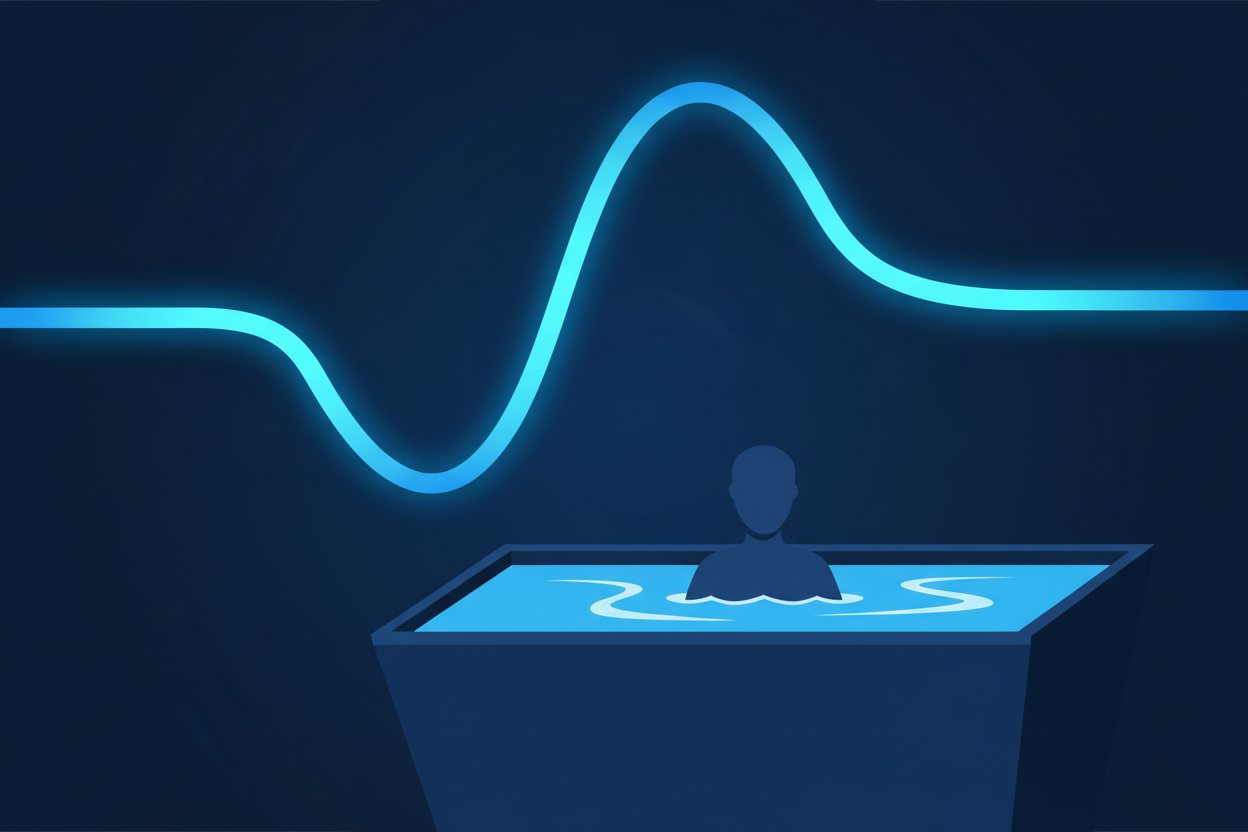
Cold water immersion produces one of the most significant acute norepinephrine elevations of any non-pharmacological intervention. Research has documented increases of 200–300% above baseline with cold water immersion at temperatures around 57°F (14°C). The response is rapid — norepinephrine begins to rise within seconds of immersion — and the elevation persists for a meaningful period post-session.
The functional consequences of this norepinephrine spike are significant for performance-oriented practitioners:
- Heightened alertness and focus: Norepinephrine is a primary driver of the brain's attentional systems. The post-plunge clarity that practitioners consistently report is not placebo — it is a direct neurochemical effect.
- Mood elevation: Norepinephrine plays a central role in mood regulation. Low norepinephrine is associated with depression and cognitive fatigue; acute elevation produces the opposite effect.
- Metabolic activation: Norepinephrine stimulates thermogenesis and fat oxidation, which is one mechanism behind the metabolic benefits associated with regular cold exposure.
- Anti-inflammatory signaling: Norepinephrine has documented anti-inflammatory properties, which partially explains the recovery benefits of cold water immersion beyond simple vasoconstriction.
Dopamine: The Sustained Effect
Dopamine is the neurochemical most associated with motivation, reward anticipation, and sustained drive. It is distinct from norepinephrine in both its function and its temporal profile in response to cold exposure.
Research has documented dopamine elevation of approximately 250% above baseline following cold water immersion — a magnitude comparable to certain pharmacological stimulants, but with a critically different profile. Unlike stimulant-driven dopamine spikes, which are followed by a rebound crash as receptor sensitivity downregulates, the dopamine elevation from cold exposure does not appear to produce the same crash-and-depletion pattern.
The dopamine effect from cold immersion is also notably sustained. Studies have documented elevated dopamine levels persisting for 2–4 hours post-session — a window that covers a significant portion of a working day if the session is performed in the morning.
For the performance-oriented practitioner, this has direct implications:
- Sustained motivation and drive: The post-plunge elevation in dopamine supports extended periods of focused, motivated work — without the mid-afternoon energy collapse associated with stimulant use.
- Reward system calibration: Regular cold exposure may help recalibrate the dopamine reward system over time, reducing the pull of low-effort, high-stimulation behaviors in favor of higher-effort, higher-reward activities.
- Depression and anhedonia: Dopamine dysregulation is a core feature of depression and anhedonia. The acute dopamine elevation from cold exposure is one reason cold water immersion is being studied as an adjunct intervention for mood disorders.
The Interaction Between Norepinephrine and Dopamine
Norepinephrine and dopamine are biosynthetically related — dopamine is a direct precursor to norepinephrine in the catecholamine synthesis pathway. They also interact functionally: norepinephrine modulates the prefrontal cortex's ability to filter signal from noise, while dopamine drives the motivational salience of goals and rewards.
The combination of acute norepinephrine elevation (alertness, focus, anti-inflammatory effect) and sustained dopamine elevation (motivation, drive, mood) is what makes cold water immersion a uniquely effective cognitive performance tool. Neither effect alone fully explains the post-plunge state that practitioners describe. Together, they do.
Protocol Variables That Affect Neurochemical Output
Temperature: The neurochemical response scales with temperature intensity. The 39–50°F range produces the most pronounced norepinephrine and dopamine elevation. Warmer temperatures (59–68°F) produce meaningful but attenuated responses. There is no evidence that going below 39°F amplifies the neurochemical benefit further — it primarily increases risk.
Duration: The neurochemical response is front-loaded. The majority of the norepinephrine spike occurs in the first 1–2 minutes of immersion. Dopamine elevation is similarly triggered early. Sessions of 2–6 minutes at 39–50°F are sufficient to produce the full neurochemical effect. Extending beyond this does not meaningfully amplify the response.
Timing: Morning sessions maximize the functional benefit of the dopamine elevation window. A 5-minute plunge at 7am produces a dopamine elevation that may persist through midday — covering the highest-value cognitive work hours for most practitioners.
Breathing: Controlled breathing during immersion — slow, deliberate, diaphragmatic — modulates the sympathetic response and influences the neurochemical profile. Practitioners who maintain controlled breathing during the acute stress response report a cleaner, more sustained post-plunge state compared to those who hyperventilate or exit early.
What This Means for Your Protocol
If neurochemical output is your primary goal — cognitive performance, mood regulation, sustained motivation — the optimal protocol is short, cold, and consistent. 3–5 minutes at 39–50°F, performed in the morning, 5–7 days per week. The cumulative effect of daily dopamine and norepinephrine elevation, without the receptor downregulation associated with stimulants, is the long-term benefit.
Consistency requires reliable equipment. A protocol that depends on ice delivery, manual temperature management, or gym access is not a protocol — it is an occasional event. The Orivon Black Frost, White Frost, and Metallic Frost maintain precise temperature at 39–50°F daily, without manual intervention — which is what a neurochemical protocol actually requires.
Complimentary freight delivery included with every Orivon order (valued at $250–$400). Price match guarantee applies.
The Bottom Line
Cold water immersion produces a 200–300% norepinephrine spike and a 250% dopamine elevation — both documented in peer-reviewed research, both with direct functional consequences for alertness, focus, mood, and sustained motivation. The protocol that maximizes these effects is short, cold, consistent, and performed in the morning. Everything else is detail.
References
- Srámek, P., et al. (2000). Human physiological responses to immersion into water of different temperatures. European Journal of Applied Physiology, 81(5), 436–442.
- Søberg, S., et al. (2022). Deliberate cold exposure causes a prolonged increase in human brown adipose tissue metabolic activity. Cell Reports Medicine, 3(10).
- Shevchuk, N.A. (2008). Adapted cold shower as a potential treatment for depression. Medical Hypotheses, 70(5), 995–1001.
- Leppäluoto, J., et al. (2008). Effects of long-term whole-body cold exposures on plasma concentrations of ACTH, beta-endorphin, cortisol, catecholamines and cytokines in healthy females. Scandinavian Journal of Clinical and Laboratory Investigation, 68(2), 145–153.
- Huberman, A. (2021). Huberman Lab Podcast, Episode 66: Using Deliberate Cold Exposure for Health and Performance. Huberman Lab.
Disclaimer: This article is for informational purposes only and does not constitute medical advice. Consult a qualified healthcare provider before beginning any cold water immersion practice, particularly if you have a cardiovascular condition or other health concerns.


Leave a comment
This site is protected by hCaptcha and the hCaptcha Privacy Policy and Terms of Service apply.