

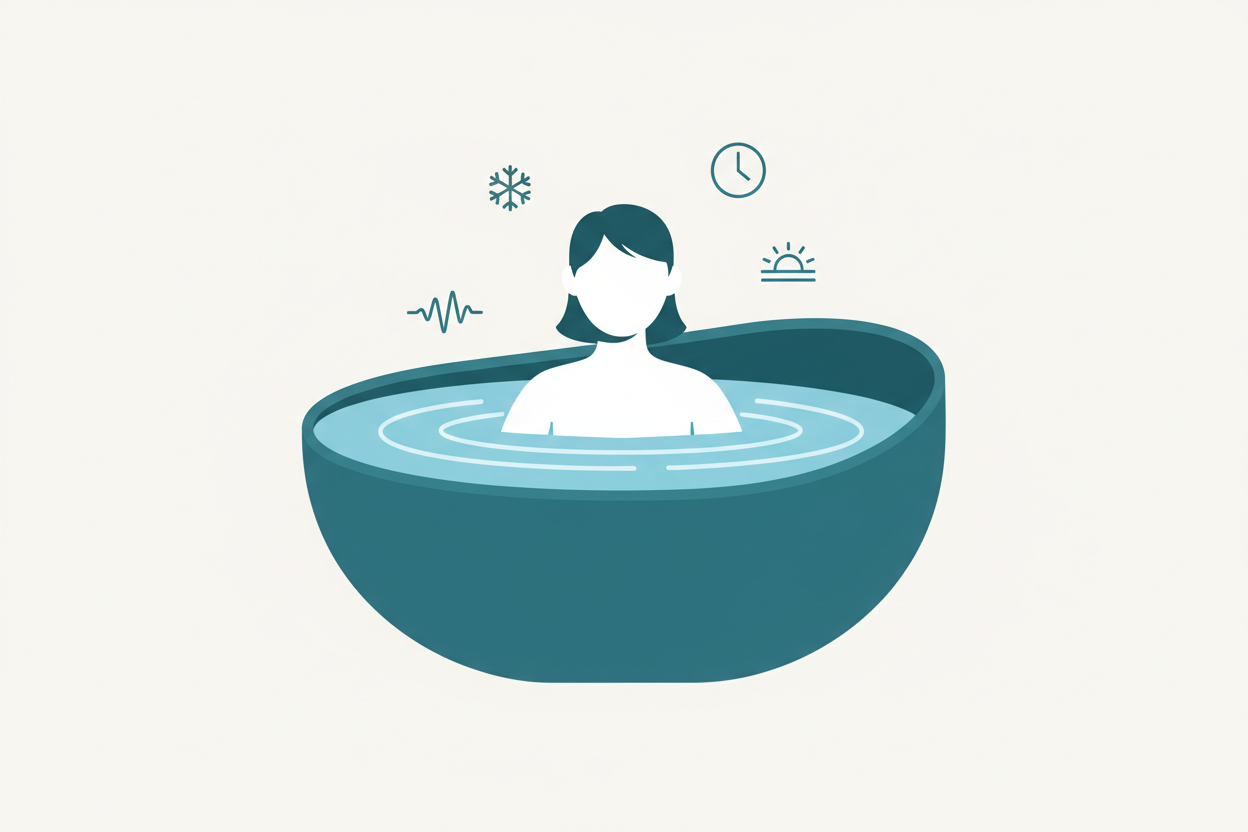
How to Start Cold Plunging: A Beginner's Guide
Cold plunging has gone from elite athletic recovery to mainstream wellness — and for good reason. The science is solid, the barrier to entry is lower than you think, and the results compound quickly. If you've been curious but not sure where to start, this guide covers everything you need for your first session and beyond.
What to expect your first time
Your first cold plunge will feel intense. That's normal — and it's also the point. When cold water hits your skin, your body triggers an immediate stress response: sharp intake of breath, elevated heart rate, and a flood of adrenaline. Within 30–60 seconds, that response begins to settle. Your job in those first moments is simple: control your breathing.
Slow, deliberate exhales through the mouth will calm your nervous system faster than anything else. Most beginners are surprised by how quickly the initial shock passes.
What temperature should you start at?
Research supports 50–59°F (10–15°C) as the optimal range for therapeutic benefit — norepinephrine release, anti-inflammatory response, and cardiovascular adaptation all occur meaningfully in this window. For your first few sessions, starting at the higher end (55–60°F) is perfectly fine. Work down gradually as your tolerance builds over 2–4 weeks.
Anything above 60°F will feel refreshing but won't produce the same physiological response. Anything below 50°F is advanced territory — save it for when you're comfortable.
How long should you stay in?
Start with 1–2 minutes. That's enough to trigger the full cold shock response and begin the norepinephrine cascade. You don't need to push through 10 minutes on day one — that's not how adaptation works.
A simple progression:
- Week 1–2: 1–2 minutes at 55–60°F
- Week 3–4: 2–3 minutes at 52–55°F
- Month 2+: 3–5 minutes at 50–54°F
Consistency matters far more than duration. Three sessions per week at 2 minutes will outperform one heroic 10-minute session every two weeks.
Morning or evening?
Morning is the most popular time — the adrenaline and norepinephrine spike creates a natural energy boost that many users describe as better than caffeine. It also sets a tone of deliberate discomfort early in the day that tends to carry over into other habits.
Evening plunges work too, but time them at least 2 hours before bed. The initial stimulation can delay sleep onset if you plunge too close to bedtime. The core temperature drop that follows a plunge does support deeper sleep — it just needs time to settle.
What to do after
Let your body rewarm naturally for at least 5–10 minutes before jumping in a hot shower. The rewarming process — shivering, vasoconstriction rebound, metabolic heat generation — is part of the adaptation. Cutting it short with immediate heat reduces some of the benefit.
If you have access to a sauna, this is where contrast therapy comes in. Moving from cold to heat (or heat to cold) compounds the cardiovascular and hormonal response significantly. Learn how contrast therapy works →
Common beginner mistakes
- Going too cold too fast — adaptation takes weeks, not days. Start conservative.
- Holding your breath — breathe through the shock. Breath control is the skill.
- Inconsistency — the benefits are cumulative. Three times a week beats once a week every time.
- Warming up immediately after — let your body do the work. Natural rewarming is part of the protocol.
- Plunging alone when new — have someone nearby for your first few sessions, especially if you have any cardiovascular concerns.
Ready to get started?
Explore our cold plunge tubs — precision-chilled, built for daily use, and ready before 5am. No ice. No guesswork.
This content is for informational and educational purposes only and is not intended as medical advice. Consult a qualified healthcare professional before beginning any cold therapy protocol, particularly if you have cardiovascular conditions, hypertension, or other health concerns.


Leave a comment
This site is protected by hCaptcha and the hCaptcha Privacy Policy and Terms of Service apply.