

Why Summer Is Actually the Best Time to Start Cold Plunging
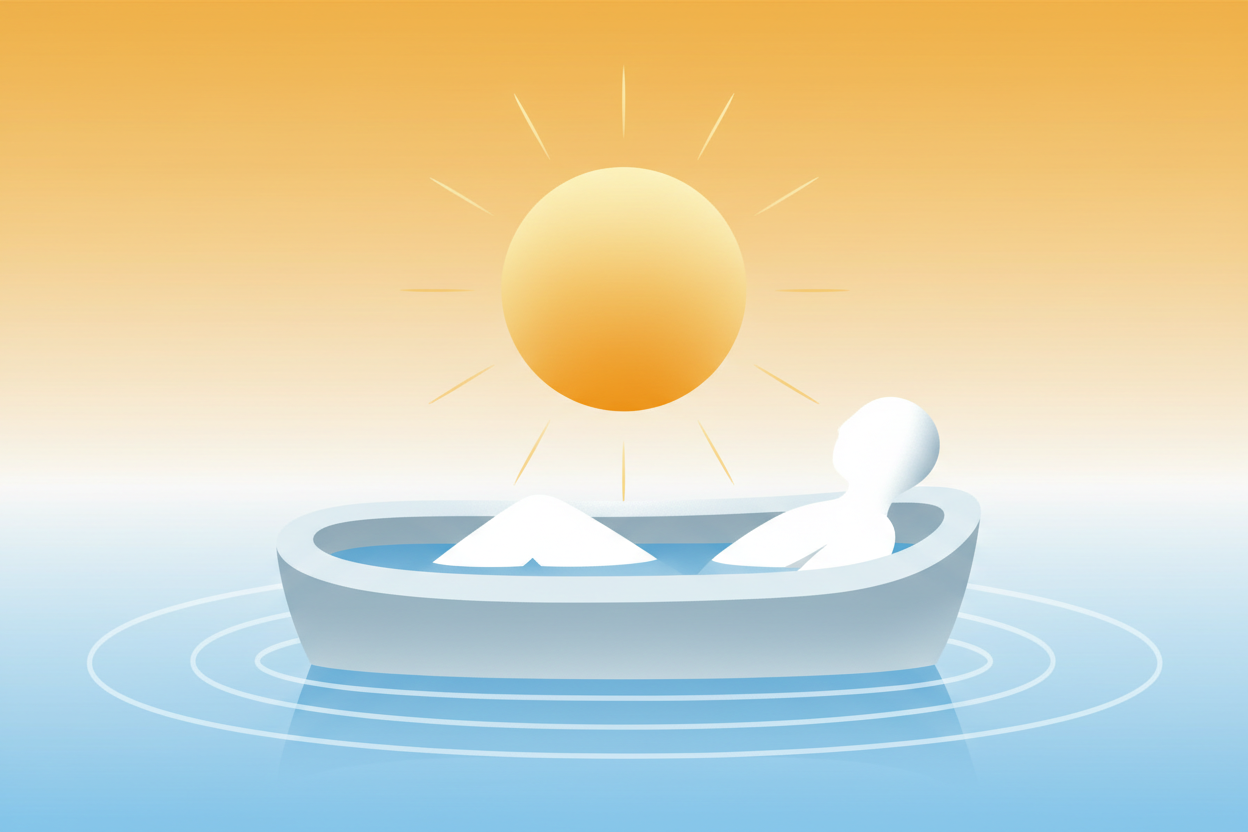
Most people assume cold plunging is a winter thing — a Scandinavian ritual for people who enjoy suffering in the dark. The reality is the opposite. Summer is the single best time to start a cold plunge practice, and the reasons are both practical and physiological.
Your body is already warm
The hardest part of cold plunging for beginners isn’t the cold — it’s the transition. In winter, you’re stepping from a cold room into cold water, and your nervous system is already braced. In summer, you’re warm, your muscles are loose, and the contrast feels genuinely refreshing rather than punishing. That first session is dramatically easier when your baseline body temperature is higher.
This isn’t just anecdotal. Thermal contrast — the delta between your body temperature and the water — is part of what drives the physiological response. A warm body entering cold water produces a sharper norepinephrine spike than a cold body entering the same water.
Heat makes cold plunging more effective
Summer heat is essentially free pre-heating. Spending time outdoors, exercising, or simply existing in 85°F weather elevates your core temperature before you ever step near the tub. That elevated baseline amplifies the contrast therapy effect — the same principle behind pairing a sauna with a cold plunge, except the sun is doing the work for you.
If you do have a sauna, summer is when the combination becomes almost effortless. Heat up, cool down, repeat. The cardiovascular adaptation from that cycle is significant. Learn how contrast therapy works →
Recovery demand is higher in summer
Summer typically means more activity — more training, more outdoor sports, more physical output. That’s exactly when recovery infrastructure matters most. Cold immersion at 50–59°F reduces delayed onset muscle soreness, clears metabolic waste, and gets you back to full output faster than passive rest.
Athletes who build a cold plunge habit in summer tend to maintain it year-round because the results are undeniable when recovery demand is high.
Habit formation is easier when it feels good
Behavioral science is clear on this: habits form faster when the immediate reward is positive. In summer, stepping into a cold plunge after a hot day feels like relief. That positive association — cold = comfort — is a powerful anchor for a long-term habit. By the time winter arrives, the practice is already automatic.
Compare that to starting in January, when every session feels like a battle against the elements from the moment you wake up. The habit is harder to build when the immediate experience is purely aversive.
Lower competition for your attention
Summer schedules tend to be more flexible. Mornings are longer, routines are looser, and there’s more space to experiment with new habits without the pressure of a packed fall or winter calendar. That flexibility makes it easier to find your ideal session time, dial in your protocol, and build consistency before life gets busy again.
How to start this summer
- Start at 55–60°F — comfortable enough to build confidence, cold enough to produce results
- Go in the morning or post-workout — both are high-leverage timing windows
- Start with 1–2 minutes — consistency beats duration every time
- Let your body rewarm naturally — skip the hot shower for at least 10 minutes after
- Aim for 3 sessions per week — enough to build adaptation without overdoing it
There’s no better time to start than when the conditions are working in your favor. Explore our cold plunge tubs — precision-chilled, built for daily use, and ready whenever you are.
This content is for informational and educational purposes only and is not intended as medical advice. Consult a qualified healthcare professional before beginning any cold therapy protocol, particularly if you have cardiovascular conditions, hypertension, or other health concerns.


Leave a comment
This site is protected by hCaptcha and the hCaptcha Privacy Policy and Terms of Service apply.